OZONE THERAPY

Ozone is a colourless gas made up of three oxygen atoms and is found in our atmosphere. Ozone gas is the main reason the sky appears blue. Besides protecting us from harmful ultraviolet radiation reaching the Earth, ozone is also very important in purifying the air. Widely used today as a disinfectant in fields such as healthcare, logistics and textiles, ozone is also used therapeutically in medicine.

Thanks to its disinfectant properties, ozone gas has been intensively researched in dentistry over the past decade, but because of conflicting results it has not become a core element of treatment protocols. With the right indications, however, it has been shown to support other treatments. In particular, ozone has been shown to support treatment in decayed teeth, in cleaning dentures after fungal infections, through the disinfectant effect of ozonated water after tooth extraction due to apical abscess, and in reducing the bacterial load within gum pockets in patients with periodontitis or with bone and gum loss around implants (peri-implantitis).
That said, ozone application is by no means a standalone treatment.
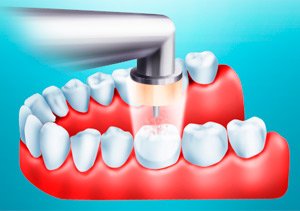
Ozone is applied with a special device and tips, because ozone is delivered in direct contact with the surface. The application is painless and no anaesthesia is required.
For caries-related use, a suitable tip is attached to the ozone device and applied to the area with incipient decay or the area cleaned of decay; with a controlled application, bacteria, viruses and fungi are eliminated from the tooth surface.
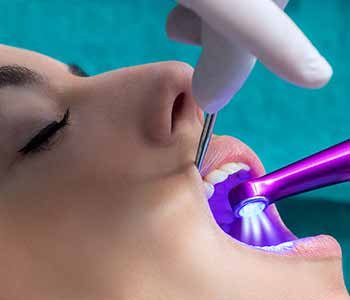
In periodontal treatment, a suitable tip is placed inside the gum pocket and ozone is applied for about one minute so that it acts on the bacteria within the pocket.
In this way, the bacterial colonies remaining after scaling and root planing are broken down and removed.
This allows the gums to reattach to the teeth more effectively. As it also increases blood circulation, it has a positive effect on wound healing.
In addition to its antimicrobial properties, its disinfectant effect makes it a preferred adjunct to dental treatments.
All of these applications are performed when the doctor deems them necessary.