DENTAL IMPLANTS

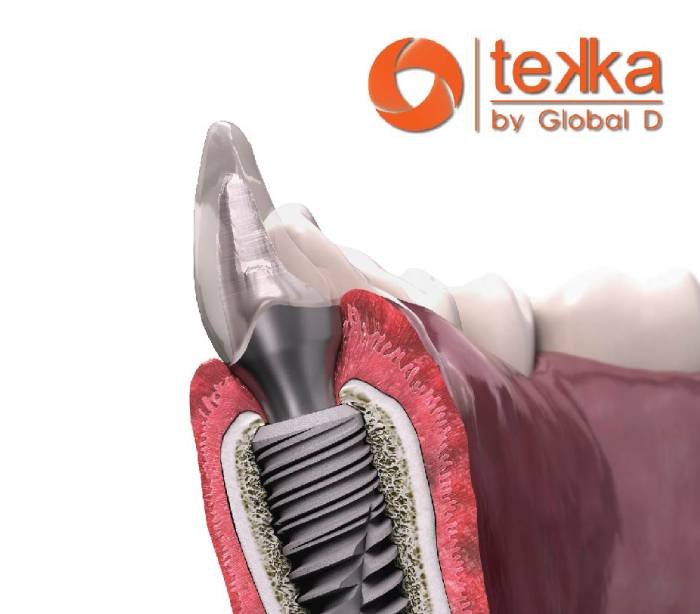
An implant is a kind of screw made of titanium that is placed in the jawbone to replace one or more missing teeth. This titanium-alloy screw is a tissue-friendly material with excellent tissue compatibility and bone integration, which is why it is the material of choice in dental implant treatment. In recent years, zirconium implants have accounted for roughly 3–5% of dental implant production; however, their use is still very limited and the material and its components require further research and development. After placement in the bone, dental implants enter a process of fusing with it. This is called osseointegration, and the resulting structure can be considered part of the body.
Implants make it possible to close gaps left by missing teeth without grinding down the neighbouring teeth. Even in completely edentulous mouths, placing a sufficient number of implants allows well-retained, more comfortable prostheses to be made.
For any questions about implant treatment planning, brands and prices, send us a message or ask via WhatsApp:


Whether a single implant or full-mouth implants are planned, a detailed examination comes first. When implants are being considered;

Where there is sufficient bone and the other oral conditions are suitable, a dental implant can be placed very quickly. The total time for an implant operation — opening the tissue, placing the implant in the jawbone and closing — is 10–15 minutes.
For full-mouth implant treatment we can usually place 8 to 14 implants in the whole mouth in a single day. The number varies according to the patient's bone condition, expectations and the doctor's recommendation. At the patient's request, it can also be done region by region over several sessions.
After placement, a period of time must pass for the implant to fuse with the bone — a minimum of 8 weeks for the lower jaw and 16 weeks for the upper jaw. At the end of this period the necessary components are fitted to the implant, impressions are taken, and the permanent teeth are completed in 3–4 sessions.

Implant surgery is usually a single-stage procedure. In one session, the titanium screw — effectively an artificial tooth root — is placed in the bone and covered. After the period your doctor considers appropriate, it is uncovered, impressions are taken and the implant-supported teeth are prepared and fitted. In some cases, if measurements taken during the operation give adequate values, gum-forming components (healing abutments) are fitted at the same time while healing takes place. The advantage is that no additional procedure is needed when the implant-supported tooth is made. Indeed, if these values are achieved and the doctor finds conditions suitable, a temporary tooth can even be made within a few days.
Where bone deficiency prevents implant placement, implants can be placed in two or more stages. The staging is planned by the surgeon performing the operations. Usually one or more augmentation methods — bone grafting, ridge expansion, sinus lift and many others — are performed first. After the required healing periods, the implant operation is carried out, followed by the same process as after single-stage surgery.
Implant surgery is performed under local anaesthesia, so no pain is felt during the procedure. Today's anaesthetic solutions and techniques are highly advanced, providing deep and long-lasting numbness with local anaesthesia. Alternative anaesthetic solutions are available for people with allergies to certain anaesthetics or a relevant medical history.
There is usually no pain after implant surgery either. Any pain that does occur is easily relieved with painkillers. In certain special situations, such as advanced surgical procedures, additional medications and recommendations ensure the postoperative period is as pain-free as possible.
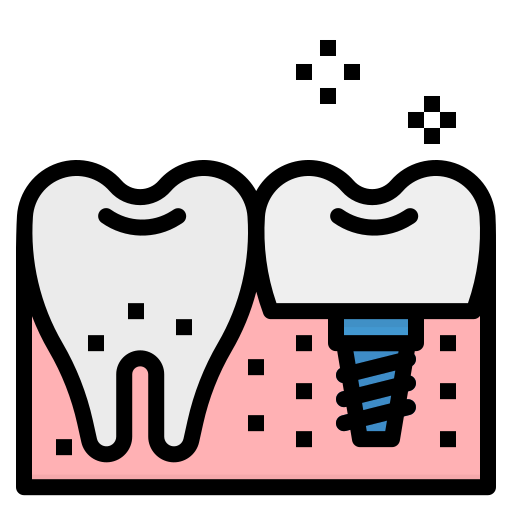
Implants have been used for around 60 years. Looking at the implants placed and the research conducted over all these years: if the operation was successful, the patient attends check-ups, maintains the recommended oral care habits, has professional cleanings at the advised intervals, replaces the prosthesis when the time comes, and no abscesses or bone-resorbing diseases arise, an implant can remain in the mouth for a lifetime and continue to function with its original prosthesis.
However, in the event of impaired healing, the influence of undiagnosed systemic diseases, or chronic or severe heavy trauma to the implant, implants can fail to establish an adequate bond with the bone during the primary healing period and be lost. If there is sufficient bone in the area, a new implant can be placed.
After osseointegration — the bonding of the titanium screw with the bone — implants become part of the body. Unless a significant problem arises, they continue to function just like our own teeth.
The original purpose of the dental implant was to restore missing teeth on an artificial root without grinding down the healthy teeth on either side. In time it became clear that even completely edentulous patients could be given teeth using implants of adequate diameter and length, and implant treatment became increasingly important in dentistry. With implants there is no need to grind down healthy teeth, which means those teeth can be kept in service far longer.
Another advantage is that removable dentures used by edentulous patients can be stabilised, or such patients can be given fixed teeth altogether. Implants also slow the rate of bone resorption in areas left without function after tooth extraction.
In many cases they also offer a new aesthetic option.

Implant prices generally vary with the brand of implant used. Dr. Laçin sets implant prices at a reasonable level. While many hospitals keep implant prices very high, Dr. Laçin applies a very reasonable pricing policy while using trusted international brands.

Every surgical procedure carries certain risks of complications. Experienced clinicians, however, begin only after planning based on an intraoral examination, X-rays and, if necessary, tomography. At this first stage the patient's medical history and any medications must be evaluated. If the patient has conditions under medical supervision or requires continuous medication, a consultation letter can be sent to the treating physician. Performed under these conditions, implant treatment is a very safe treatment. It should be remembered that these steps are required in any surgical procedure. It is precisely because such detailed planning is carried out that implant treatment is performed safely throughout the world.